

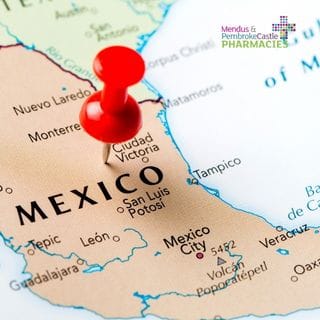

Mexico is one of the most popular long haul destinations for UK travellers, but it is also a country where the answer to “what vaccines do I need” genuinely depends on where you are going and what you plan to do once you get there. A week at an all-inclusive resort in Cancun looks very different, from a health perspective, to two weeks backpacking through rural Chiapas or volunteering in a jungle community.
Rather than relying on a generic checklist, it is worth thinking about your Mexico trip in detail, including your route, accommodation type, and planned activities, before deciding which vaccines are right for you. This guide explains why itinerary matters so much and what to consider before you travel.
If you are planning a trip to Mexico from Pembroke, contact us at Mendus Pharmacy or visit our travel services page to book a consultation ahead of your departure.
Quick Answer
There is no single set of vaccines required for everyone travelling to Mexico. Hepatitis A and typhoid are commonly recommended for most travellers due to food and water exposure, while additional vaccines such as Hepatitis B, rabies, or tetanus boosters may be advised depending on your activities, accommodation, and how remote your itinerary is. A travel health consultation, ideally four to six weeks before you depart, is the best way to confirm what applies to your specific trip.
Why Mexico Does Not Have a One Size Fits All Vaccine List
Mexico is a large and geographically varied country, spanning busy coastal resorts, high altitude cities, dense jungle regions, and rural farming communities. Health risks are not evenly spread across the country, and they are also shaped heavily by how you plan to travel.
Someone staying within a resort complex, eating at supervised restaurants and rarely leaving tourist areas, faces a different risk profile to someone travelling independently, staying in hostels, eating street food, or spending time in rural or forested areas. This is why a travel health consultation looks closely at your full itinerary rather than simply your destination country.
Vaccines Commonly Considered for Mexico
While recommendations are always tailored to the individual, the following vaccines are frequently discussed for travel to Mexico:
- Hepatitis A, due to potential exposure through food and water
- Typhoid, particularly for travellers eating outside tourist establishments
- Hepatitis B, often considered for longer stays, medical volunteering, or activities with a higher risk of contact with blood or bodily fluids
- Tetanus, usually reviewed as part of routine UK vaccination status rather than being Mexico specific
- Rabies, considered for those planning outdoor, rural or adventure activities where contact with animals is more likely
Travel vaccine recommendations should always be based on your specific itinerary, activities, and health history, rather than the destination alone.
Vaccine Considerations by Travel Style
| Travel Style | Typical Considerations |
|---|---|
| All-inclusive resort stay | Lower food and water risk, though Hepatitis A is still often recommended as a precaution |
| City break or business trip | Routine vaccines reviewed, Hepatitis A commonly discussed depending on eating habits |
| Independent or backpacking travel | Hepatitis A and typhoid more strongly considered due to varied food and accommodation |
| Rural, jungle or adventure travel | Rabies and Hepatitis B often discussed alongside Hepatitis A and typhoid |
| Volunteering or extended stays | Broader vaccine review, including Hepatitis B and up to date routine immunisations |
How Specific Activities Can Change the Picture
Beyond your general travel style, specific planned activities can shift which vaccines are worth discussing:
- Visiting caves, jungles, or areas with wildlife may increase the relevance of a rabies vaccine, particularly if you will be far from medical care
- Trying street food or eating outside your accommodation increases the relevance of Hepatitis A and typhoid vaccines
- Longer stays, medical or dental treatment abroad, or close contact work may increase the relevance of Hepatitis B
- Any cuts, grazes, or exposure to animals during outdoor activities make it important to have up to date tetanus protection
- High altitude destinations, such as Mexico City, are not a vaccine consideration but may be worth discussing separately with a healthcare professional if you have underlying health conditions
Checking Your Routine and Booster Vaccines
A travel consultation is also a useful opportunity to check that your routine UK vaccinations are up to date, since these are sometimes overlooked ahead of international travel. This can include:
- Tetanus, diphtheria and polio boosters, which some adults have not had recently
- MMR, particularly for those unsure of their childhood vaccination history
- Seasonal flu vaccination, depending on the time of year and personal risk factors
When to Book Your Travel Vaccine Consultation
| Timeframe Before Travel | What to Do |
|---|---|
| 6 to 8 weeks | Book a travel health consultation and confirm your full itinerary and activities |
| 4 to 6 weeks | Complete recommended vaccines that require time to take effect or multiple doses |
| 1 to 2 weeks | Finalise any remaining vaccines and review general travel health advice |
| Day of departure | Pack vaccination records and any relevant medication |
Booking early gives the most flexibility, particularly for vaccines given as a course over several weeks, though later consultations can still be worthwhile if your travel date is closer.
Practical Tips Before You Travel
Having your accommodation, activities and regions of travel written down helps a healthcare professional give more accurate, tailored advice.
Carrying a copy of your vaccination history while travelling can be useful if you need medical care abroad or on future trips.
Vaccines reduce certain risks, but sensible food and water precautions remain an important part of staying well while travelling.
If your plans change after your consultation, particularly involving new activities or regions, it is worth checking whether this affects your vaccine needs.
Frequently Asked Questions
Mexico is not generally considered a yellow fever risk country, but a certificate may be required if you are arriving from a country with risk of yellow fever transmission. This should be checked as part of your itinerary review.
Malaria risk in Mexico is generally low and limited to certain rural areas, so antimalarial medication is not usually needed for standard resort or city travel. This is worth confirming based on your specific route.
Yes, vaccines such as Hepatitis A can still be recommended even for resort based stays, as a precaution against food and water exposure that can occur even in managed environments.
Children may be recommended similar vaccines to adults depending on their travel plans, though timing, dosing and suitability should always be discussed with a healthcare professional in advance.
If your trip includes other countries, particularly in Central or South America, each destination and route should be reviewed together, as this can change which vaccines are relevant overall.
It is still worth booking a consultation even with short notice, as some protection may still be possible, though options can be more limited compared with booking further in advance.
Some vaccines, such as Hepatitis A, offer longer term protection with a follow up dose months later, which can be useful if you plan to travel to similar destinations again in future.
Plan Your Mexico Trip with Confidence
Because vaccine needs for Mexico depend so heavily on your individual itinerary, the most reliable way to prepare is to speak with a healthcare professional who can review your full travel plans, rather than relying on general online advice alone.
Reach out to us at Mendus Pharmacy to book a travel health consultation, or visit our travel services and vaccinations pages, or read more on our news blog for further travel health guidance ahead of your trip.